The Standout Cases

Featured Experiments

Not every psi experiment is ambiguous. Some produced results so specific, so well-documented, and so resistant to conventional explanation that they deserve to be examined on their own terms. These are their stories.

A scruffy mixed-breed terrier similar to Jaytee, the dog at the center of Sheldrake's telepathy experiments

Photo: Pexels (free license). Not the actual Jaytee β€” a similar terrier.

The Dog Who Knew

In over 100 videotaped experiments, a terrier named Jaytee went to the window when his owner decided to come home β€” from seven kilometers away, at randomly chosen times, with nobody in the house who knew she was coming.

When Pam Smart went out, her terrier Jaytee ignored the front window β€” cameras recorded him there just 4% of the time across hundreds of hours of tape. But something happened the moment Pam decided to come home. From over seven kilometers away, at randomly chosen times nobody in the house could have known, Jaytee walked to the window and waited. He was there 55% of the time during her return journeys (p < 0.0001), across more than 100 videotaped experiments. In one trial filmed for Austrian television, he reached the window within 11 seconds of Pam being told β€” at a randomly selected instant β€” to head home. He did this when he was home alone. He did this when Pam returned at non-routine times of her own choosing. His anticipation typically began before she even started her journey β€” at the moment of her decision to leave. Over 200 hours of time-coded footage, scored blind, documented the same impossible thing: this dog knew.

Skeptic Richard Wiseman tested the same dog with the same cameras and the same random-return protocol. He published a paper declaring the results negative. But when Sheldrake reanalyzed Wiseman's raw footage, it showed Jaytee at the window 4% of the time during absences and 78% during returns β€” an even larger effect than Sheldrake had found in his own experiments. Wiseman had reached his conclusion by applying a binary pass/fail threshold that did not capture the behavioral shift the tapes clearly showed; the dog behaved the same in both teams' experiments. A separate replication with a Rhodesian ridgeback named Kane found the same pattern: 1% during absences, 26% during returns (p = 0.0002). Two dogs, two owners, hundreds of hours of footage, and a skeptic whose own data confirmed what he set out to disprove. If these tapes mean what they appear to mean β€” that a dog can detect the moment its owner decides to come home, across miles, through walls, with no sensory cue β€” then something is passing between them that no branch of science can currently explain.
A vintage rotary telephone dramatically lit against darkness β€” evoking the moment before you pick up and somehow already know who is calling

Photo: Luis La, Pexels (free license)

Who's Calling?

In 571 randomized trials, participants guessed which of four people was calling before picking up the phone β€” correctly 40% of the time versus 25% chance. Callers from overseas were identified at an even higher rate of 65%, as if emotional closeness, not distance, carried the signal.

In Rupert Sheldrake's telephone telepathy experiments, participants guessed which of four people was calling before picking up the phone. Across 571 trials with 63 participants, they were right 40% of the time β€” well above the 25% chance rate (p = 4 Γ— 10⁻¹⁢). Callers from overseas, physically distant but emotionally close, were identified at 65% (p = 3 Γ— 10⁻⁸), while callers in the UK scored 35%. In a companion study, Sheldrake videotaped 271 trials with independent cameramen filming both locations; hit rates held steady at 45% (p = 10⁻¹²). Familiar callers were identified 61% of the time; strangers fell to chance. Participants who rated themselves confident in their guess were right 82% of the time. The paradigm was later extended to email, SMS, and automated online tests over two decades of replications (see also the full controversy). In a replication filmed for Channel Five television, Colleen Nolan β€” the youngest of the Nolan Sisters, a 1980s British pop group β€” sat alone in a room at the Strand Palace Hotel while her four sisters waited in a bar on Poland Street, Soho. Casino dice chose who called. She named the right sister half the time. Her favorite sister Linda: identified every call. Her skeptical sister Anne: just one in four.

The most rigorous independent replication came from Stefan Schmidt's team at the University of Freiburg: pre-deposited protocols, casino-grade dice, 557 videotaped trials, 29 participants. The group result was 26.7% β€” indistinguishable from chance. If the story ended there, it would be a clean failure to replicate. But one participant scored 42.5% across 80 trials (p = 0.00015, odds of roughly one in 6,600), and Schmidt's team concluded that β€œthere are a few participants who are able to score reliably and repeatedly above chance.” A 2025 meta-analysis pooling all 26 experiments from 15 papers found performance 8.7% above chance overall (p = 10⁻⁷), with stronger effects for emotionally bonded pairs and pre-selected participants. When the paradigm was tested under precognition conditions β€” the caller selected after the guess β€” results fell to chance, suggesting the effect requires a live mind at the other end. Twenty years of experiments, from landlines to email to text messages, tell the same story: distance does not diminish it, emotional closeness amplifies it, tighter controls do not make it disappear, and no one has identified a conventional mechanism that explains it.

An African Grey parrot perched on a branch β€” the same species as N'kisi, the language-using parrot tested for telepathy

Photo: Pexels (free license). Not the actual N'kisi β€” a similar African Grey.

What the Parrot Said

An African Grey parrot was filmed alone while his owner looked at random photographs in a sealed room on a different floor. Three blind judges transcribed what the parrot said. His words matched the pictures at odds of 5,000 to 1.

N'kisi was an African Grey parrot and, his owner AimΓ©e Morgana believed, a mind reader. Rupert Sheldrake designed an experiment to test this under conditions that left no room for cues. AimΓ©e sat in a sealed room on a different floor from N'kisi, opened a randomly selected photograph from a sealed envelope, and looked at it in silence for two minutes. Downstairs, N'kisi talked β€” and was filmed. Three independent transcribers, who had no idea which photograph was being viewed, wrote down what the parrot said. Across 147 trials, N'kisi's words matched the photograph 23 times. Chance predicted 12. The odds against a fluke were roughly 5,000 to 1 (p = 0.0002). The photographs had been randomized by a third party. The statistics were checked by an independent analyst at the Free University of Amsterdam. N'kisi also repeated his key words more often when they were hits than misses β€” as if he was more certain when he was right. A parrot, alone in a room, was describing photographs he could not see, viewed by a person he could not hear, in a room he could not access.

NASA astrophysicist Jeffrey Scargle, one of three peer reviewers, raised a real concern: could biases in how N'kisi's known vocabulary was matched to the photograph categories have inflated the results? Statistician Mikel Aickin applied an entirely different analytical method to the same data and reached the same conclusion β€” the effect held. The study made TIME magazine but has never been independently replicated, and that is its one genuine weakness. The controls, however, were unusually stringent for an animal study: sealed envelopes, synchronized time-coded video of both parrot and owner, blind transcription by three independent judges, and third-party randomization. If an African Grey parrot can reliably say what a person is looking at in a sealed room on another floor β€” through no sensory channel anyone can identify β€” then the bond between N'kisi and AimΓ©e involved something that the word “communication” does not begin to cover.

Source papers
A disco ball casting scattered light against a dark background, evoking the celebratory energy of New Year’s Eve

Photo: NEOSiAM 2024+ on Pexels (free license)

When the Ball Drops

For 27 consecutive years, random number generators around the world deviated from chance at the stroke of midnight on New Year’s Eve. The effect appeared where billions celebrated. Where few did, it vanished.

In time zones where billions of people ring in the New Year, random number generators become measurably less random at the stroke of midnight. In time zones where few people celebrate, they don't. That is the central finding of Dean Radin's analysis of 27 years of data from the Global Consciousness Project β€” a worldwide network of quantum-noise devices that produce streams of truly random ones and zeros, running continuously in dozens of countries since 1998. Radin applied seven independent statistical methods to 33 billion samples (6.6 trillion bits), comparing every New Year's Eve midnight to every other midnight of the year. The principal components analysis flagged the deviation at z = βˆ’4.9 β€” less than one chance in two million. The mean-shift analysis found a 6-sigma anomaly in the four and a half minutes centered on midnight. No other night produced anything comparable. When Radin partitioned the data by population, time zones with 6.8 billion people counting down showed significant deviations; zones with only 629 million did not. More minds focused on the same joyful instant, bigger signal β€” the same dose-response relationship that, in any other field, would be treated as evidence that something real is happening.

The Global Consciousness Project has faced serious critique. NASA astrophysicist Jeffrey Scargle argued that the project's flagship cumulative-sum analyses can generate impressive-looking structure from pure noise. GCP insider Peter Bancel went further: his reanalysis of the project's 7-sigma cumulative result argued the anomaly tracks the intentions of the handful of researchers running the experiment, not humanity's collective mood. The New Year's Eve study addresses both objections. Unlike post-hoc event selections such as September 11, New Year's Eve is as predictable as it gets β€” no cherry-picking, no ambiguity about when the window opens. And the population partition tests Bancel's reinterpretation directly: if the effect came from the experimenters' minds rather than the celebrants', it should appear equally in all time zones. Instead, it scaled with the crowd. The study is not pre-registered, and the choice of seven analytical methods introduces some flexibility β€” but those methods converge on the same answer across 27 independent replications of the same event. If random numbers respond to New Year's Eve because billions of minds are focused on the same moment β€” and fall silent where few minds are present β€” then something is coupling human consciousness to the behavior of machines specifically designed to be immune to outside influence.

Women competing in a rugby lineout at the 2025 Rugby World Cup β€” the kind of scene a lucid dreamer described before a skeptic randomly selected it as a target

Photo: JHock93, CC0, via Wikimedia Commons. 2025 Women's Rugby World Cup, Canada vs Australia.

The Dreamer and the Skeptic

In a pre-registered experiment, a lucid dreamer described women playing a game on a football pitch in a stadium. A prominent skeptic then randomly selected the target: Iranian women playing rugby. Out of 2,707 targets, the match was 80,000 to one.

Dave Green can enter a lucid dream almost at will. In a pre-registered experiment in 2023, he fell asleep, recognized he was dreaming, and walked to a computer in his dream house. He asked to see a photograph he had not yet been shown. What appeared: women seated around a table playing backgammon β€” but the table had markings like a football pitch, and they sat in the center of a large stadium with an audience watching. He woke, recorded the scene, and emailed it to Chris French β€” professor at Goldsmiths, University of London, and one of Britain's most prominent skeptics. French would then select a target using random.org, picking from a database of hundreds of news stories. The target he selected: Iranian women in hijabs playing rugby at a tournament in Italy. Women. A sport on a rectangular pitch. An audience. When AI text-embedding models compared Green's dream against all 2,707 items in the target database, the match scored Z = 4.99 β€” odds of roughly 80,000 to one after correcting for every comparison. The dream was recorded, timestamped, and in the skeptic's inbox before the target was chosen.

This was one of ten trials in a study by Green, French, and Mossbridge, published in the peer-reviewed International Journal of Dream Research. Across all ten, five of Green's lucid dreams matched their randomly selected targets by AI scoring (p = .033). Green recruited French himself, wanting a skeptic to close every loophole. In one miss, Green dreamed of a townhouse with a “For Sale” sign. French said nothing until the experiment ended, then revealed the sketch matched his own house, which at that moment had a real estate sign out front. He called it “remarkably coincidental.” The study has real limitations: ten trials from one dreamer, exploratory AI scoring, and flawed human judging. The skeptics on the team said the case for precognition remains unestablished. But one result sits in the published record: a dream of women on a football pitch in a stadium, sent to a skeptic whose random number generator then selected β€” from thousands of possibilities β€” Iranian women playing rugby. Whatever produced that dream, it described a target that did not yet exist, chosen by a man recruited because he did not believe such things were possible.

Source papers
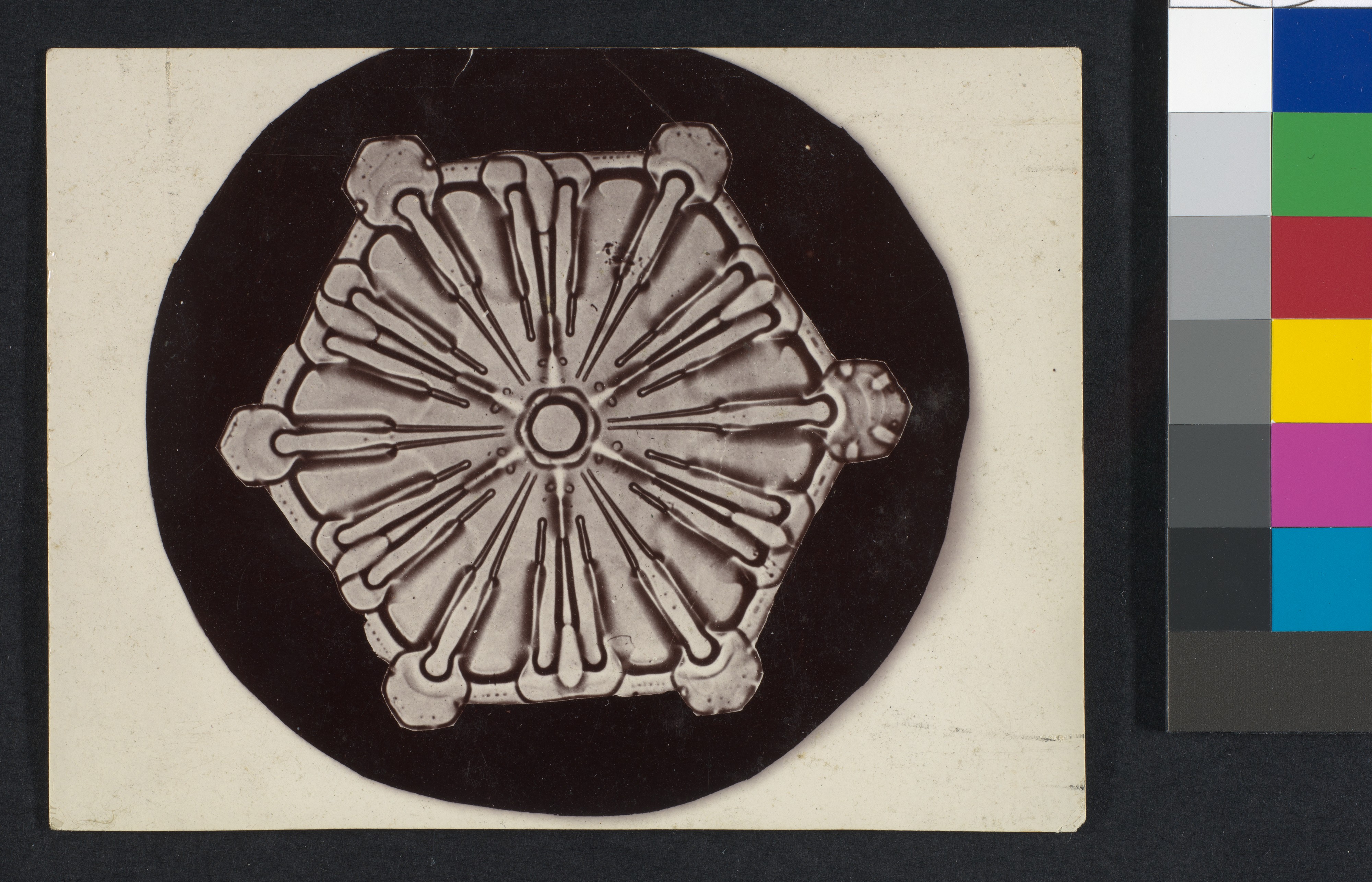
A snow crystal photographed by Wilson Bentley in the early 1900s β€” the kind of intricate ice formation that Emoto claimed could be influenced by human intention

Photo: Wilson Bentley, c. 1900, CC0, via Metropolitan Museum of Art / Wikimedia Commons

What the Water Showed

Two thousand people in Tokyo focused kind intentions on water locked in a shielded room in California, five thousand miles away. Blind judges rated the ice crystals it formed as significantly more beautiful. A triple-blind replication confirmed it.

Masaru Emoto's photographs of ice crystals became a global phenomenon β€” water exposed to prayer formed intricate, beautiful crystals; water cursed or ignored formed ugly ones. His books sold millions. Scientists dismissed the claim as uncontrolled pseudoscience. Then Dean Radin designed a proper test. In 2006, approximately 2,000 people in Tokyo focused kind intentions toward water locked inside an electromagnetically shielded room in California, 5,000 miles away. A technician blind to which samples were treated photographed 40 ice crystals. One hundred independent judges, equally blind, rated their beauty. The treated crystals scored significantly higher (p < .001), with a large effect size (d ≈ 1.04). In a 2008 triple-blind replication, 1,900 people in Austria and Germany focused gratitude toward water in the same shielded room, and 2,579 online judges rated the resulting crystals. Again, treated water formed more beautiful crystals (p = 0.03). Combined across both studies: p = 0.0004.

The crystal studies have real limitations. The 2006 test drew its 40 crystals from only four bottles, making the effective sample size tiny despite the large effect. The 2008 replication produced marginal p-values, and distant control water scored slightly higher than treated water in some comparisons β€” an anomaly the researchers flagged but could not explain. Neither study was pre-registered, and Emoto was a co-author on both. But four independent teams have since found converging results using entirely different measures:

Four measures, four teams, one direction. If focused intention can change the physical properties of water through electromagnetic shielding from 5,000 miles away, and those changes show up on instruments and in judges' ratings when nobody involved knows which water was treated β€” then something is reaching the water that the shielding was designed to stop.